
The Brand Map
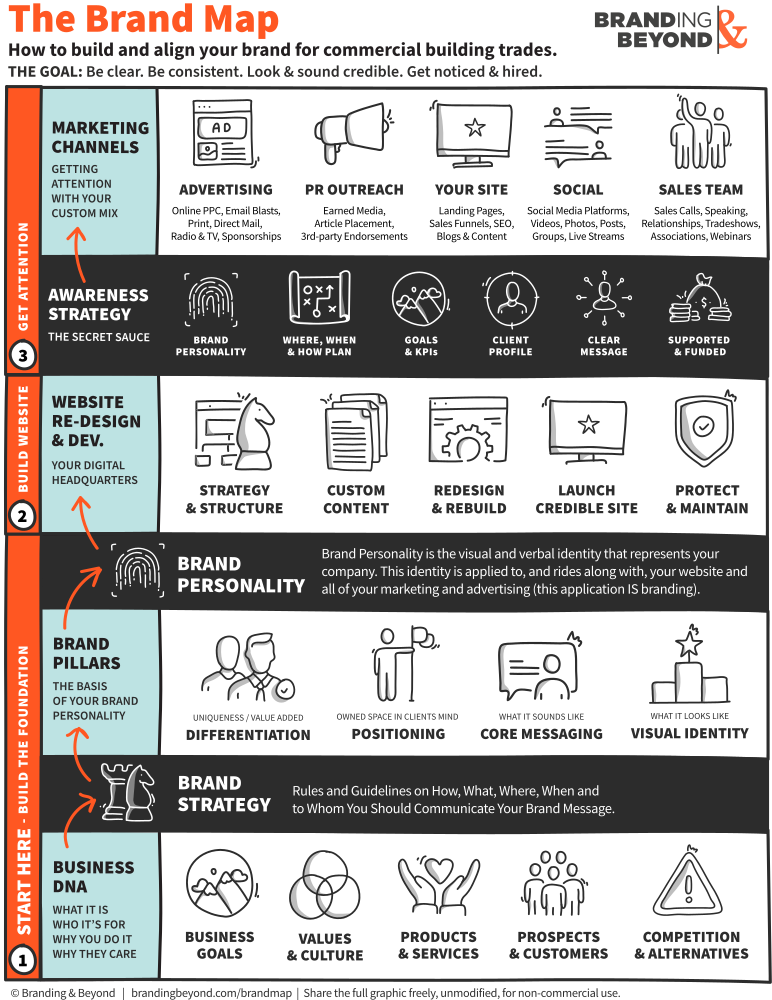
Every layer your brand needs, in the order it has to be built. This is how we align a firm’s spine so the outside finally matches the inside.
Most firms in the commercial building trades are not failing at marketing. They are marketing off a foundation nobody poured. It is why good firms keep losing work to lesser ones.
The map below is the whole thing on one page. Thirty years of rebrands, boiled down to what actually has to exist and what order it has to exist in. Read it from the bottom up.
Why the Order Matters
You would never frame a second floor before the slab cured. You would never spec finishes before you knew the occupancy. You know this in your bones because it is how you build.
Brands work the same way, and almost nobody treats them that way.
Most firms start at the top of this map. They buy ads. They redo the website. They push harder on social. They hire someone to “do marketing.” Then they wonder why none of it sticks and why every campaign feels like starting over.
It feels like starting over because it is. Nothing compounds when there is no foundation underneath it.
You cannot hang a marketing plan on a foundation nobody poured.
STEP 1: BUILD THE FOUNDATION
Business DNA
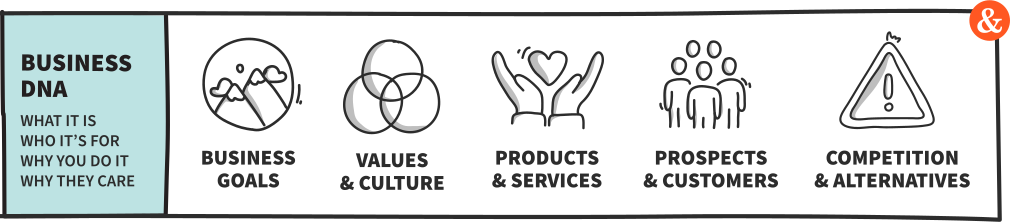
What it is · Who it’s for · Why you do it · Why they care
Business goals. Values and culture. Products and services. Prospects and customers. Competition and alternatives.
This is not a mission statement exercise. This is getting honest about what the company actually is right now, who it actually serves best, and what it is genuinely better at than the four other firms on the bid list.
The question it answers: Why do our best clients keep coming back and sending us referrals?
Skip it and: every downstream decision becomes a matter of opinion. Your logo comes down to who in the room likes blue. Your website copy comes down to whoever writes it that week. There is no filter for deciding anything, so everything gets decided twice.
Brand Strategy

The rules of engagement
How, what, where, when, and to whom you communicate your brand message.
Strategy is not a document that sits in a drawer. It is the decision-making filter that makes every future choice faster. Once it exists, “should we sponsor that golf tournament” stops being a debate and becomes a five-second answer.
The question it answers: How do we decide what is worth doing?
Skip it and: you get hope marketing. Try a thing, hope it works, stop when it doesn’t, try a different thing next quarter. Expensive, exhausting, and nothing you learn carries forward.
Brand Pillars
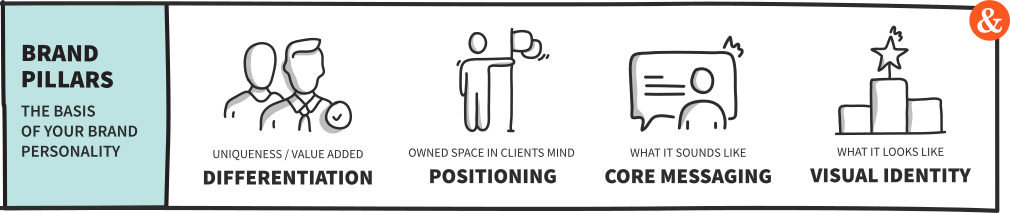
Differentiation · Positioning · Core Messaging · Visual Identity
The four that actually matter.
Differentiation is your uniqueness and value added. Not “quality work and great service.” Everyone says that. What is true about you that a competitor could not honestly claim?
Positioning is the space you own in a client’s mind. The thing they think of you as, before they think anything else.
Core Messaging is what it sounds like. The words. What you say about who you are, what you do, and why it matters, said the same way by everyone in the company.
Visual Identity is what it looks like. Logo, color, type, imagery. Note where it sits: fourth, not first. It is the last pillar, not the first move.
The question it answers: What do we stand for, and how do we say and show it?
Skip it and: you become an accidental commodity. If a prospect cannot tell you apart from the other bidders, the only remaining variable is price. You get compared on the one dimension you least want to compete on.
Brand Personality

Where verbal and visual come together
Your brand personality is the visual and verbal identity that represents your company. It rides along with your website and every piece of marketing you produce.
This is worth being precise about, because the industry is sloppy with it: applying your brand personality consistently is what branding actually is. Branding is not the logo. Branding is the act of putting a defined identity on everything, every time.
The question it answers: What does it feel like to encounter this firm, anywhere?
Skip it and: you have a logo and a pile of unrelated materials. The proposal, the website, the truck wrap, and the trade show booth each look like they came from different companies. Which, functionally, they did.
STEP 2: BUILD THE WEBSITE
Your Website
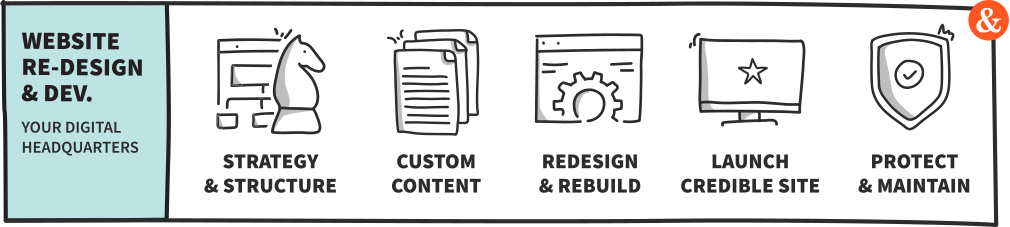
Your digital headquarters
Strategy and structure. Custom content. Redesign and rebuild. Launch a credible site. Protect and maintain.
Now, and only now, does a website make sense. With everything below it decided, the site stops being a design project and becomes an act of translation. The hard questions are already answered. What is left is building it.
This is also why our clients get the last website they need for a long time. A site built on a foundation grows with the company. A site built on nothing has to be torn down the moment the company changes.
The question it answers: When someone finds us and has twelve seconds, do we look like a viable choice?
Skip the layers below and: you get a pretty site that says nothing. It looks fine for about two years, quietly stops representing you, sits and decays for five more, and then gets torn down and rebuilt from scratch. Same money. Same result. That cycle is the single most expensive habit in this industry.
STEP 3: GET ATTENTION
Awareness Strategy

The secret sauce
Brand personality. A where, when, and how plan. Goals and KPIs. A client profile. A clear message. Supported and funded.
This is the layer almost everyone skips, including people who did the foundation work. It is the bridge between having a brand and anyone knowing about it. It is also where “supported and funded” lives, which is the honest part: a plan nobody owns and nobody pays for is not a plan.
The question it answers: Who needs to hear this, where are they, and who is actually responsible for making it happen?
Skip it and: you have a beautiful brand nobody has seen. Not seen, not hired.
Marketing Channels
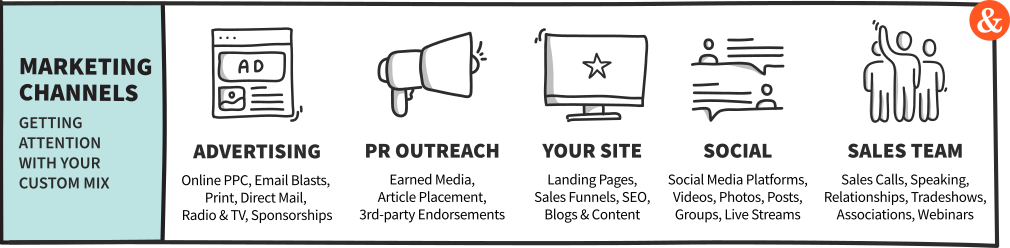
Getting attention with your custom mix
Advertising. PR outreach. Your site. Social. Your sales team.
This is the layer everyone starts with and the only one most firms ever think about. It works fine once everything under it exists, because now every channel is saying the same thing, and repetition across channels is what builds recognition.
Note that your sales team is a channel. Probably your best one. They are out there every day representing the brand, and they are only as strong as the tools you hand them.
The question it answers: Where do we show up, and how often?
Skip the layers below and: you are paying to broadcast a message that does not differentiate you. You are buying reach for confusion, which is the most expensive thing you can buy.
Find Your Missing Layers
Go back to the map and be honest about which layers your firm has actually built. Not intended to build. Not talked about in a meeting three years ago. Built.
- Nothing below the website? You do not need a redesign yet. You need a foundation, and a redesign without one is money you will spend twice.
- Foundation exists but it is ten years old? You have probably outgrown it. The firm changed. The brand didn't. That gap is what everyone outside your company can see and nobody inside can.
- Everything built but nobody knows? Your gap is the awareness strategy. You have the hard part done and you are one plan away from it working.
- All of it, and it is working? Then you do not need us, and I will tell you that on the call.
Most firms find their gap in the bottom two layers. That is not a failure of effort. It is what happens when the work comes first, year after year, and branding is the only thing on the list that never calls you at 6am.

Not sure which layer you’re missing?
That is a twenty-minute conversation, not a project. Tell me what is going on and I will tell you straight where the gap is, what it would take to close it, and roughly what that costs. If we are not a fit, I will say so on the call.
Want the long version? Read What Is Brand Alignment and Do I Need an Aligned Brand?
© Branding & Beyond. Share the full graphic freely with no modifications for non-commercial use. If it helps somebody stop wasting money, use it.